

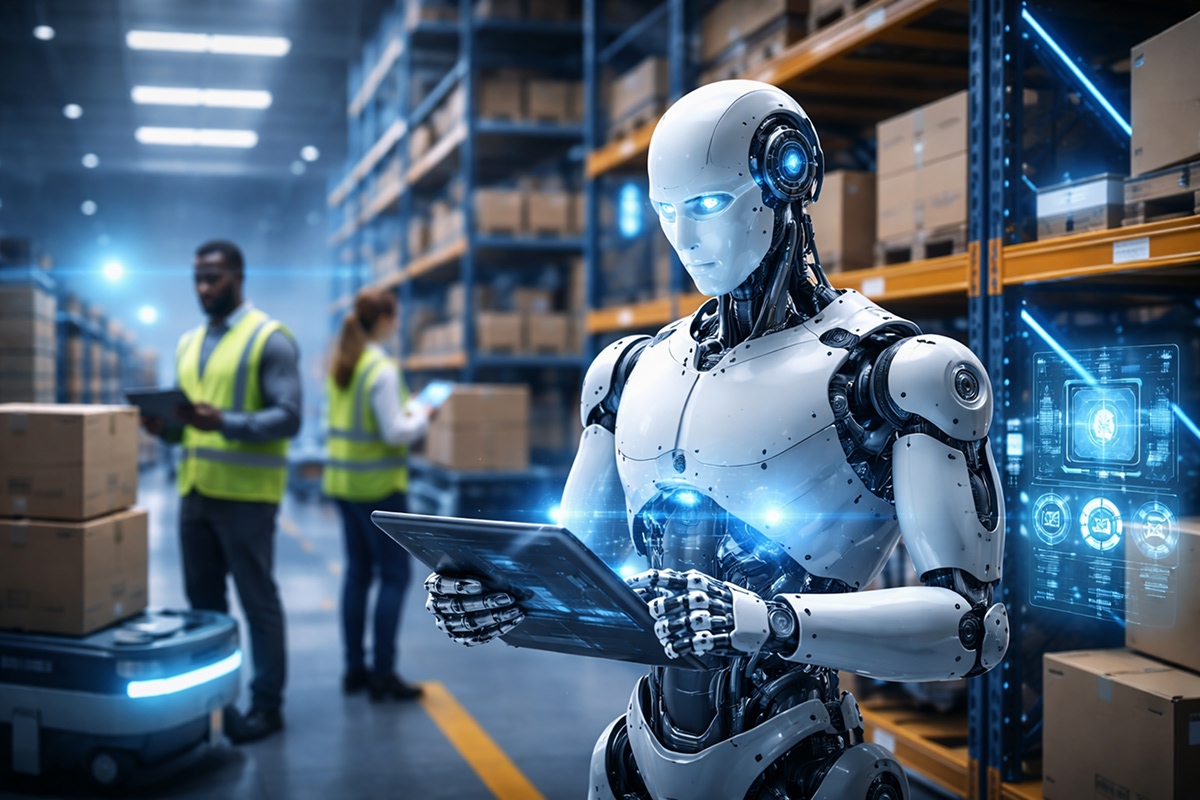
Software development, marketing, healthcare, and finance are just a few of the industries that artificial intelligence has already revolutionized. But in 2026, a fresh wave of innovation—AI-powered robots—is gaining traction. Artificial intelligence and sophisticated robotics are now being combined by startups worldwide to build machines that can carry out difficult tasks on their own.
AI-driven robots are rapidly emerging as one of the most exciting and rapidly expanding startup industries, with applications ranging from homes and farms to hospitals and warehouses. A growing number of investors, entrepreneurs, and tech firms are placing bets that the next ten years of innovation will be shaped by AI robotics.
The Development of Smart Robots
Robots are not brand-new. For many years, factories have employed industrial robots, particularly in the car industry. However, because they could not adapt to changing environments and had to follow set instructions, traditional robots had limitations.
That has been totally altered by AI.
Artificially intelligent modern robots can now:
- Use computer vision to identify objects and people.
- Gain knowledge from experience by using machine learning.
- Be able to independently navigate challenging environments.
- Engage in natural language communication with people.
Startups now have a plethora of opportunities as intelligent robots replace programmed robots.
In 2026, robotics startups are creating intelligent assistants that can collaborate with humans, rather than just being tools.
Why AI Robotics Companies Are Growing
AI robotics startups are expanding quickly due to a number of technological and economic factors.
1. Advances in Intelligent Systems
Robot intelligence has significantly increased thanks to recent developments in large language models, generative AI, and reinforcement learning. These days, robots are able to make decisions in real time and process massive amounts of data.
These advancements enable robots to carry out operations that previously required human judgment.
2. Dropping Hardware Prices
Over the last ten years, the cost of sensors, cameras, GPUs, and robotic components has significantly decreased. Startups can now more easily develop complex robots without having to make large capital investments thanks to this cost reduction.
Robotics entrepreneurs now have a lower entry barrier thanks to the combination of powerful AI software and reasonably priced hardware.
3. Global Labor Scarcity
There is an acute labor shortage in many industries. Elder care, agriculture, warehousing, and logistics are all having difficulty hiring workers.
A potential remedy is provided by AI robots, which automate physically taxing or repetitive tasks.
For example:
- Robots in warehouses can select and package goods.
- Robots used in agriculture can harvest crops.
- Robots that provide services can help elderly patients.
For robotics startups, this demand is opening up enormous market opportunities.
4. High Interest in Venture Capital
The number of investors funding AI robotics companies is rising. Robotics is viewed by venture capital firms as the next big technological trend, following software and artificial intelligence.
Robotics startups are receiving billions of dollars to build everything from humanoid assistants to delivery robots.
Industries AI Robots Are Upending
Robots driven by AI are no longer just found in factories. They are quickly growing across numerous industries.
Healthcare
In hospitals, medical professionals are assisted by healthcare robots. These robots can monitor patients, help with surgeries, administer medications, and even assist with caring for the elderly.
Startups are creating robotic assistants especially for clinics and hospitals.
Logistics and Warehousing
The rise of e-commerce has greatly increased the need for warehouse automation. AI robots can improve logistics, move inventory, and sort packages.
Logistics firms and large retailers already use autonomous warehouse robots.
Agriculture
Robotics innovation is also occurring in the farm industry. AI-powered agricultural robots are capable of harvesting fruits and vegetables, monitoring crop health, and identifying pests.
These innovations can lower labor costs while greatly boosting agricultural productivity.
Robotics for Home and Personal Use
Additionally, consumer robotics is emerging as a promising startup sector. Businesses are developing robots that can help the elderly, clean homes, and offer companionship.
Home robots are getting smarter and more practical thanks to developments in voice recognition and AI assistants.
Humanoid Robots: The Next Big Thing
Humanoid robotics is among the most fascinating fields of innovation. In order to function in environments intended for humans, these robots are made to resemble human body structures.
A number of tech firms and startups are competing to create useful humanoid robots that can carry out routine tasks like:
- Carrying goods
- Helping warehouse employees
- Supporting retail environments
- Helping the elderly
Humanoid robots are still costly and technically difficult, but they are getting closer to becoming a commercial reality thanks to quick advancements in AI and hardware.
Humanoid robots may be widely used in workplaces within the next ten years, according to many experts.
Prospects for AI Robotics Startups
Beyond just creating robots, the AI robotics ecosystem offers entrepreneurs a variety of opportunities.
Robotics Platforms for Software
Robotics operating systems and AI platforms are the focus of many startups. Developers can train robots and oversee fleets of machines with these software programs.
Robot-as-a-Service, or RaaS
Many businesses are using the Robot-as-a-Service model rather than selling robots directly to consumers. To employ robots for particular tasks, businesses must pay a monthly subscription fee.
For robotics startups, this model generates recurring revenue while lowering upfront costs.
Specialized Robots for Industry
Some startups concentrate on developing robots for particular sectors, like agriculture, construction, hospitality, or security.
Compared to general-purpose robotics companies, these specialized robots frequently face less competition and are capable of solving extremely specific problems.
Startups in AI Robotics Face Difficulties
Despite the enthusiasm, robotics startups must overcome a number of significant obstacles.
Elevated Development Expenses
It is far more expensive to build physical robots than to develop software. Hardware manufacturing, testing, and prototyping all demand large capital expenditures.
Protection and Control
Robots that operate in public areas are subject to stringent safety regulations. To guarantee that autonomous machines function safely around people, governments may impose new rules.
The Intricacy of Technology
It is very challenging to build trustworthy robots that can operate in unpredictable real-world settings. Even the most sophisticated AI systems still have trouble with some tasks that humans can complete with ease.
Due to these difficulties, robotics startups need to integrate knowledge of AI, hardware engineering, software development, and mechanical design.
Startups in AI Robotics: The Future
AI robotics has a very bright future despite the difficulties. In the coming ten years, analysts estimate that the global robotics market could grow to hundreds of billions of dollars.
Robots will become more sophisticated, accessible, and common as artificial intelligence advances.
Robots of the future could be used in:
- Hospitals supporting physicians
- Managing logistics in warehouses
- Food production is being improved by farms
- Homes that assist individuals with everyday duties
For investors and business owners, this is a huge opportunity.
AI-powered robotics has the potential to define the startup ecosystem of the late 2020s and beyond, much as mobile apps changed the technology landscape in the 2010s and the internet gave rise to thousands of startups in the early 2000s.
Conclusion
Robots driven by artificial intelligence are quickly transitioning from science fiction to practical uses. Robotics startups are about to enter a golden age of innovation thanks to advances in artificial intelligence, less expensive hardware, and rising demand for automation.
Intelligent machines have the potential to revolutionize a number of global industries, including consumer robotics, logistics, healthcare, and agriculture.
One thing is becoming evident as 2026 goes on: AI robotics is not merely a fad; it is probably going to be one of the most significant technological advancements of the coming ten years.