

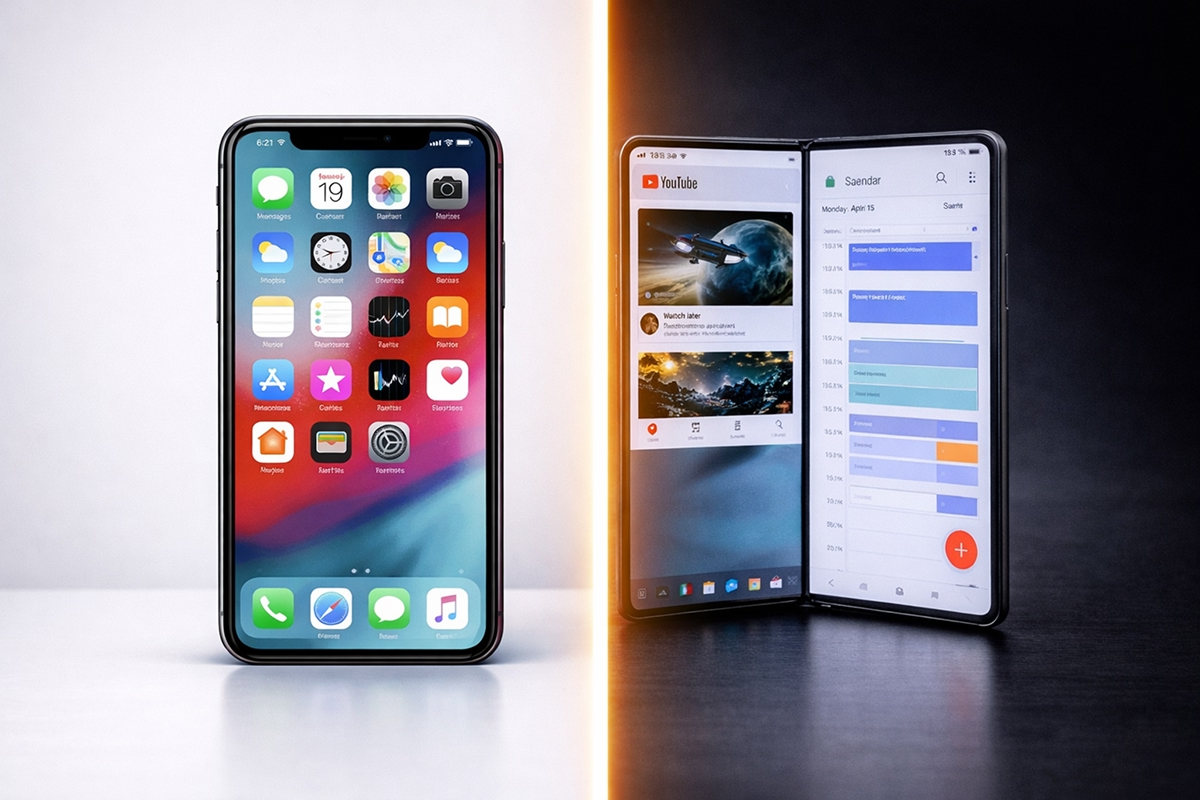
There was a time when all smartphones looked alike. Big screen, thin body, and not much else that sets them apart other than the brand name. Then, out of nowhere, foldable phones started to show up. These phones can bend, flip, and in some cases turn into small tablets. At first, it was exciting. Something new after years of dull designs.
But now that it’s 2026, the question is simple: do foldable phones really work, or are they just a cool idea that marketing is pushing?
Let’s be honest and talk about it.
What Are Foldable Phones, Exactly?
Foldable phones are smartphones that have screens that can bend. You can make the screen bigger by unfolding them, and smaller by folding them in half. There are mostly two kinds:
- Flip style, like old flip phones, is small and easy to carry
- Book style: opens up like a book to show a bigger screen
Samsung, Huawei, Motorola, and Google are already selling these phones all over the world.
At first glance, they seem like they belong in the future. But using them every day is a different story.
Also Read: Robot Smartphones Could Be the Next Evolution of Mobile Technology
The Good Side of Innovation
It really feels different when you use a foldable phone for the first time. Not just a small update, but a whole new thing.
A bigger screen without a bigger phone
This is the best thing about it. You get a screen that looks like a tablet and fits in your pocket. It feels great to read, watch videos, or browse. You don’t need to have two devices with you anymore.
It feels natural to multitask
You can open more than one app at the same time. For instance, replying to messages while watching a video. It feels more like a laptop than a phone.
Small Size (Flip Phones)
Flip phones are actually very useful. They get small enough to fit in your pocket easily. Also, it makes people think of old flip phones, which is a bit of a throwback.
A high-end feel
People still notice foldable phones. When you open one in public, people notice. It feels more expensive and unique than other smartphones.
Also Read: What Is a Smart Ring and How Does It Work?
The Reality Check (Where Things Go Wrong)
This is the part that companies don’t talk about very much.
The Problem with the Crease
There is a line (crease) in the middle of the screen on almost all foldable phones. You can see it and sometimes feel it when you scroll. It’s not a deal-breaker, but it does remind you that the screen isn’t perfect.
Worries About Durability
Foldable phones are still not as strong as regular phones in some cases. The hinge is a moving part, and over time, moving parts can wear out. Dust, drops, and long-term use can cause problems.
Even though companies have improved a lot, a lot of people still feel a little uneasy using them every day.
High Cost
Foldable phones are expensive. A lot more than regular smartphones. The benefits don’t match the price for a lot of people.
You are paying more for the folding feature, mostly.
Thicker and heavier
Most foldable phones are still thicker than regular phones when they are folded, even in 2026. Some of them also feel heavy. You can tell the difference, but it’s not uncomfortable.
Problems with app optimization
Not every app works well with foldable screens yet. Apps don’t always resize well, or it feels strange to switch between folded and unfolded modes.
Do People Really Use the Fold in Real Life?
This is the most important question.
A lot of people who buy foldable phones are excited at first. They often open and close it, try to do more than one thing at once, and look around at the features. But after a few weeks, something strange happens.
They start using it like any other phone.
The phone stays folded most of the time. Or they don’t use split-screen features very often. The “wow factor” starts to wear off.
That doesn’t mean that foldables are useless. That just means that the way people actually use it is different from what the ads say.
New Ideas vs. Hype
So, what do foldable phones do?
Why It’s Really New
- New shape (not just a specs upgrade)
- Good for using media
- Better at doing more than one thing at once
- Shows where smartphones are going in the future
Why It Seems Like Hype
- High price with few daily benefits
- Features that aren’t used often
- Durability is still a concern
- Some problems are still not completely solved
Foldable phones are a real breakthrough, but for most people, the hype around them is bigger than their actual usefulness.
Who Should Really Get a Foldable Phone?
Not everyone should get a foldable phone. But they make sense to some people.
You should think about one if:
- You love to try out new tech
- You watch a lot of things on your phone
- You do a lot of things at once
- The budget isn’t a big deal
You should skip it if:
- You only need a phone that works well and is easy to use
- You want to get your money’s worth
- You are worried about how long it will last
- You don’t care about new shapes and sizes
The Future of Foldable Phones
Foldable phones are still new. Foldables, like smartphones, need time to get better.
We can expect the following in the future:
- Screens that are stronger and don’t have creases
- Longer battery life
- Thinner designs
- Prices are lower
- More support for apps
Foldable phones could become popular if these changes happen.
Final Thoughts
Foldable phones aren’t just a fad; they are not yet useful for everyone. They are in the middle.
They give us a glimpse of what smartphones might be like in the future, but for now, they still feel like an expensive experiment. Some people will love them, while others will think they are not needed.
I think foldable phones are cool, but not necessary. That answer might change in a few years.
For now, though, they are a mix of new ideas and hype.